Article
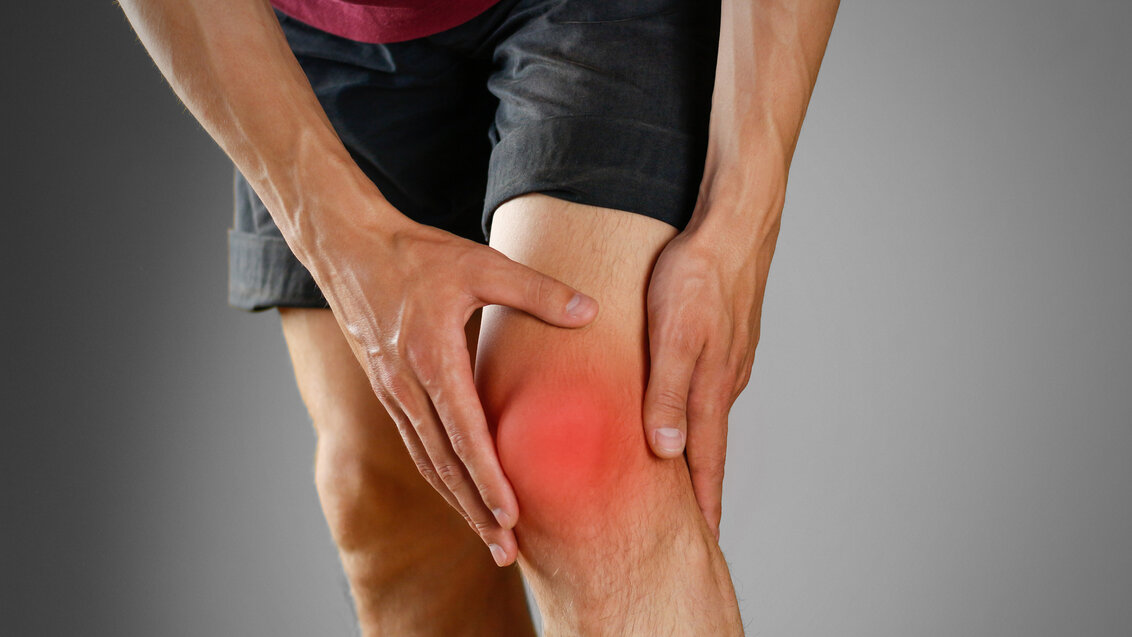
Cartilage tissue in joint spaces degrades due to degenerative processes, and the body is unable to repair the resulting damage on its own. Researchers from the AGH University of Krakow have an idea on how to support its regeneration by delivering biomaterials that activate natural regenerative processes to the affected area.
The bones in joints can move smoothly against each other since the joint surfaces are covered with cartilage tissue, among other things. It is smooth and flexible, which minimises friction during movement. However, due to long-term joint stress related to physical activity or natural ageing processes, cartilage tissue gradually degrades, which in turn leads to changes in the subchondral bone. People affected by advanced degenerative processes struggle with pain and mobility limitations, the effective treatment of which requires surgical intervention.
“Conservative treatment of osteochondral loss is usually ineffective, as joint cartilages are not vascularised and innervated. Firstly, nutrients that enable the body to rebuild the loss on its own are not delivered to the tissue due to the lack of blood vessels. Secondly, as there are no nervous connections, any pain symptoms show in patients only when the tissue is almost gone and the damage reaches the bone,” explains Professor Ewa Pamuła from the Faculty of Materials Science and Ceramics, who specialises in developing materials for regenerative medicine.
Using the natural abilities of the body
The Regenerative Biomaterials and Drug Delivery Systems team led by Professor Pamuła is part of an international consortium that is working on an innovative method for producing bioimplants that restore joints to their original functionality under a project financed by the Horizon Europe programme. Such implants would not take over the hindered functions of the joint at once but would enable the human body to activate locally unused natural regenerative abilities to rebuild tissues on its own.
“These materials should have a biomimetic structure that reflects the nature of the tissue in terms of its mechanical properties and structure (for example, the number of pores and their positioning),” the specialist points out.
Professor Ewa Pamuła. Photograph: Marianna Cielecka

The task demands the design of a two-phase material, with one phase corresponding to the bone tissue and the other to the cartilage tissue. The bone-like phase would be a ceramic representation of the cancellous bone (the so-called ‘scaffolding’, also sponge bone), which makes up the inside of the bone, enriched with biological agents attracting (multipotent) stem cells. Abundant in the bone marrow, such cells can differentiate into any other type of cell. Once these cells settle in the ‘scaffolding’, they should become osteoblasts, that is, bone forming cells.
The second phase, the design of which is the task of the AGH University-based team, would be a hydrogel imitation of cartilage tissue. It would be modified either with cells taken from the patient or with cells selected from tissue banks which would be able to multiply on their own and restore the loss.
There is also another approach that could be taken into consideration: a two-phase material without the cell enrichment. In this case, the multipotent cells produced by the patient’s body would differentiate into osteoblasts after reaching the place where the bone tissue should regenerate. In turn, osteoblasts would penetrate deeper, to an environment that would favour their transformation into chondrocytes, cells of the cartilage tissue.
Cutting the number of animal tests
The start of patient treatment would be detailed diagnostic imaging of the affected area. Based on the data obtained and with the use of mathematical modelling methods and artificial intelligence, an implant would be designed to precisely match each patient, reflecting the nano, micro, and macrostructure of their tissues and their mechanical properties. Then, both phases of the material could be 3-D printed quite quickly and relatively economically.
Professor Pamuła stipulates that as far as the second phase is concerned, the technique seems promising, but it is still being prototyped.
“There are plenty of groups working on the so-called bioprinting. They do it in sterile conditions using specialist printers and hydrogels with cells suspended in them. With this technique, you could create implants that would be a perfect fit for any patient’s defect. Nevertheless, there are still several obstacles on the way for cells to survive, multiply, and restore tissue.”
During their work, the researchers will develop innovative research methods using organs-on-chips and 3-D physiological in vitro models. Not only are they capable of providing more data than cell cultures grown using traditional methods, but they may also reduce or end the need for biochemical testing on animals in the future.
“We will be working on organoid models, which are tissue modules that allow the simultaneous examination of our materials and cells on a microscopic scale. This allows us to obtain biological information that cannot be provided by cell cultures grown on flat surfaces,” says Professor Pamuła.

Anna Baran, Professor Elżbieta Pamuła, Professor Leping Yan (Sun Yat-sen University), Dr Konrad Kwiecień, Stanisław Marecik. Photograph: Marianna Cielecka
Relief for patients and hospitals
Nowadays, surgical procedures are used to activate the process of cartilage tissue regeneration in the body. One of the most performed procedures is the microfracture surgery, which involves removing damaged cartilage and creating tiny holes in the bone to release the bone marrow and stem cells contained within. The latter differentiate into chondrocytes and multiply to rebuild the existing defect. There is also mosaicplasty, which involves the transplantation of a fragment of bone with healthy cartilage from another non-weight-bearing area of the joint to the damaged area. In rare cases, chondrocytes, multiplied in a lab from cells taken from the patient, are implanted to aid cartilage repair.
Professor Pamuła hopes that the new treatment method will allow us to provide a rapid response for people with degeneration and unblock the healthcare system.
“What should be used in cases of osteochondral loss are minimally invasive treatment methods that allow patients to return home shortly after treatment and enjoy satisfactory functioning. Injecting implants could prove promising for reducing the burden of medical stays, both for the healthcare system and for the patients themselves.”
AGH University among renowned institutions
The project “EngVIPO Engineering Vascularized Implants for Personalised Osteochondral Tissue Regeneration: From medical imaging to pre-clinical validation” is planned for four years. It is financed by the European Commission as part of Marie Skłodowska-Curie Actions – Staff Exchanges 2023 (HORIZON-MSCA-2023-SE-01-01). In addition to the AGH University of Krakow, the consortium includes seven renowned research institutions and companies from various countries: the University of Minho (Portugal), the University of Kragujevac (Serbia), the Friedrich-Alexander University of Erlangen-Nuremberg (Germany), the University of Granada (Spain), Ti-COM Sp. z o.o. (Poland), A4TEC (Portugal), and the Seventh Affiliated Hospital of Sun Yat-sen University (China).
 Perła finishes second in European solar car challenge
  Two AGH University projects with FIRST TEAM grant
  AGH Solar Plane comes fifth in SUAS 2026
  The future of technical universities and quality of education in focus at AGH University
  Academia and industry unite for AI: establishment of CESAR
  Join the Autumn School on Technologies for Space Medicine

