News
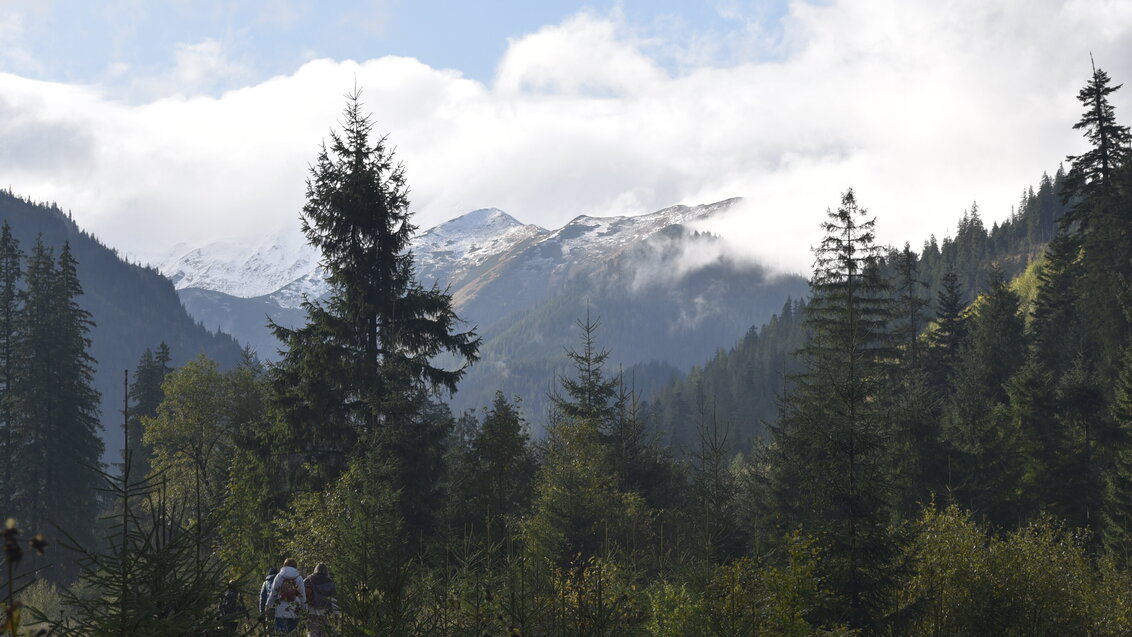
Photograph: Tryton Student Research Club
As part of a rector’s grant, students from the Tryton Student Research Club are conducting a project on the impact of tourism on soil degradation in specific degradation zones of the Tatra National Park.
“The purpose of the project is to assess trail degradation and pollution based on the number of visitors to the Tatra National Park and the extent of tourist infrastructure, combined with the results of field and laboratory studies,” explains Wiktoria Wójcik, the project leader.
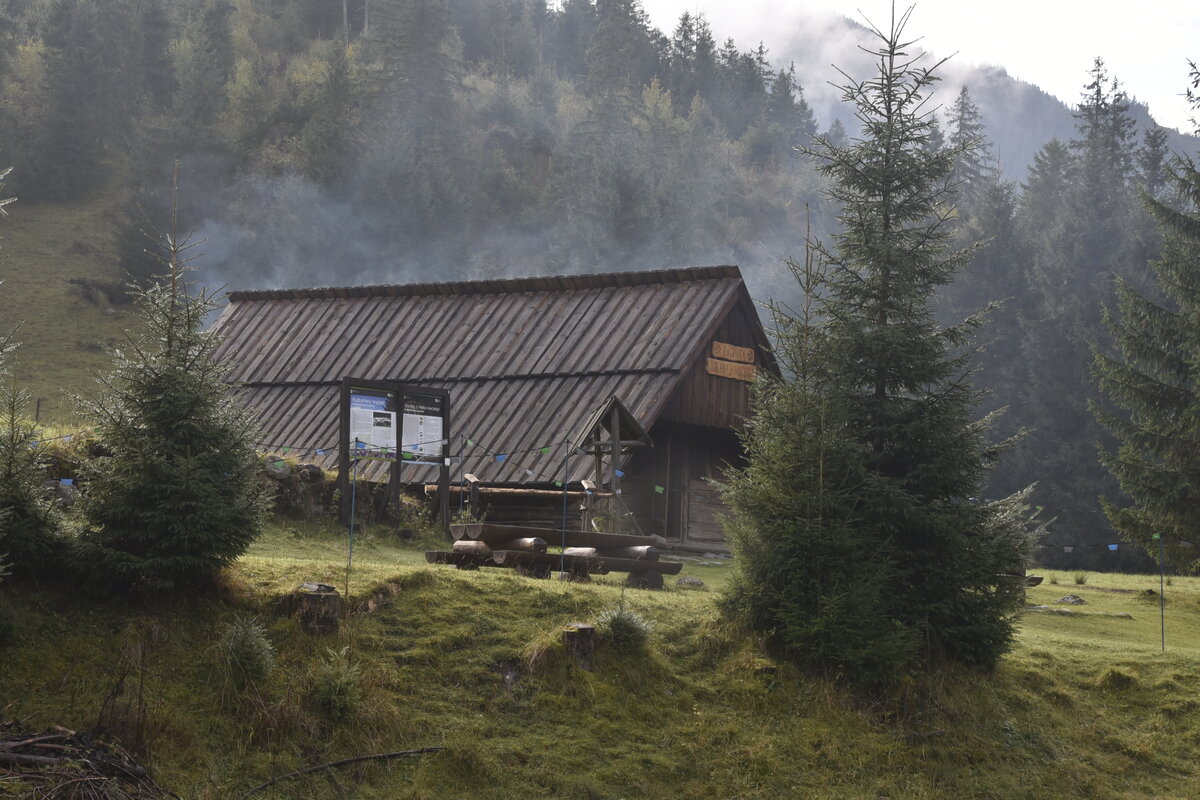
The research focuses on a section of the Tatra Mountains that attracts a high volume of tourist traffic, namely the Chochołowska Valley, including the routes up to the peaks of Grześ and Rakoń. The entire route is just under 30 kilometre long and runs from the entrance to the valley, past the mountain hut in the Chochołowska Valley, and then along two trails that climb up to the ridge from the area around the hut.
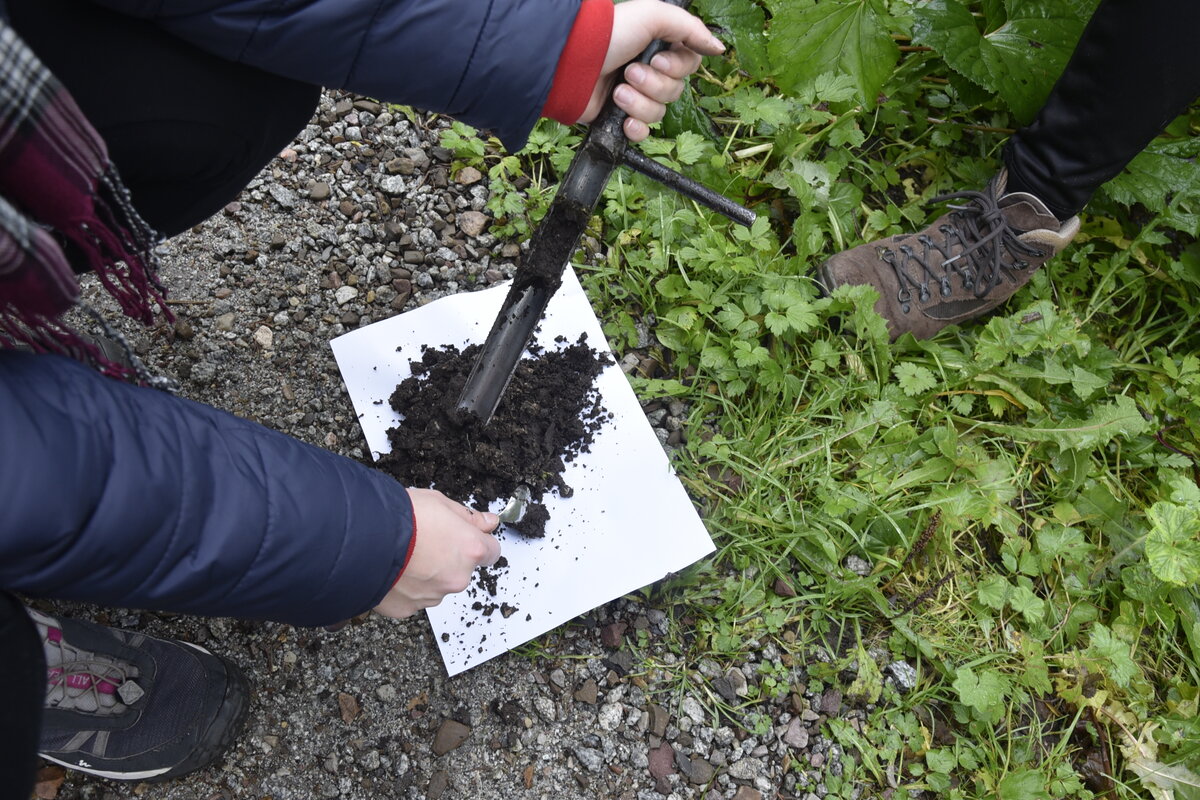
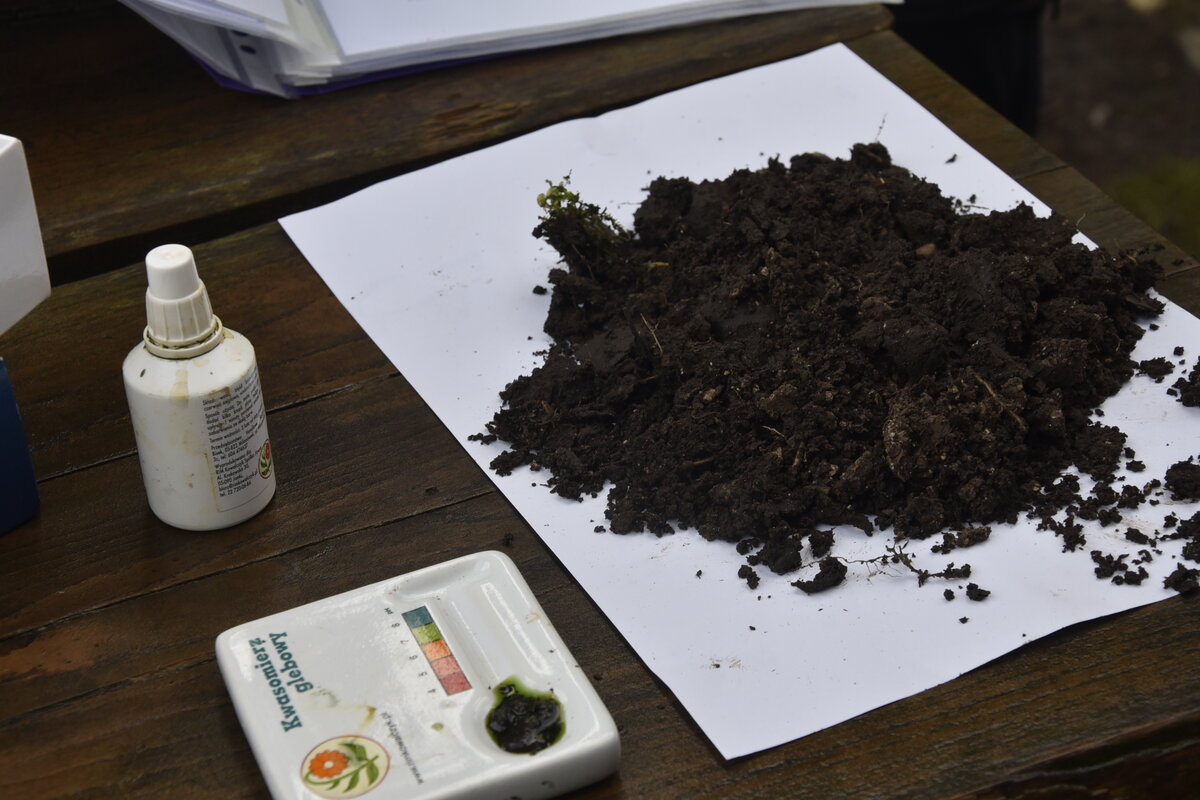
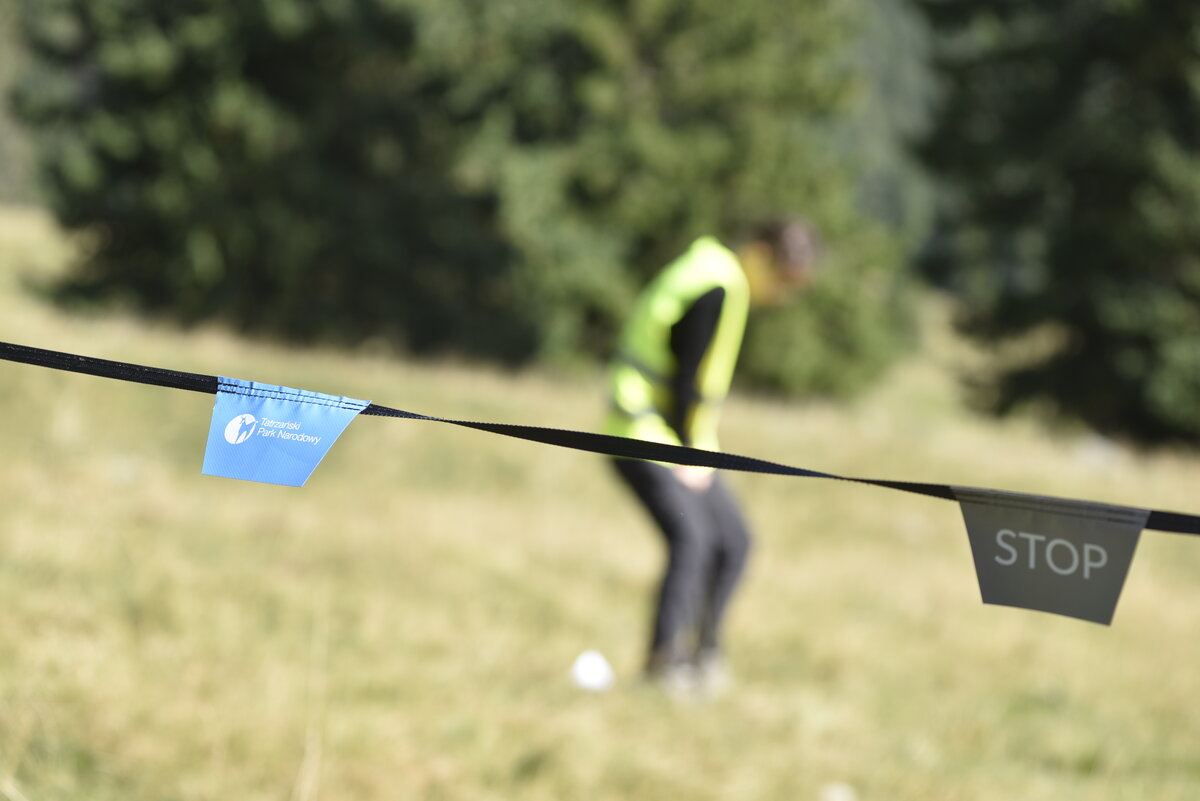
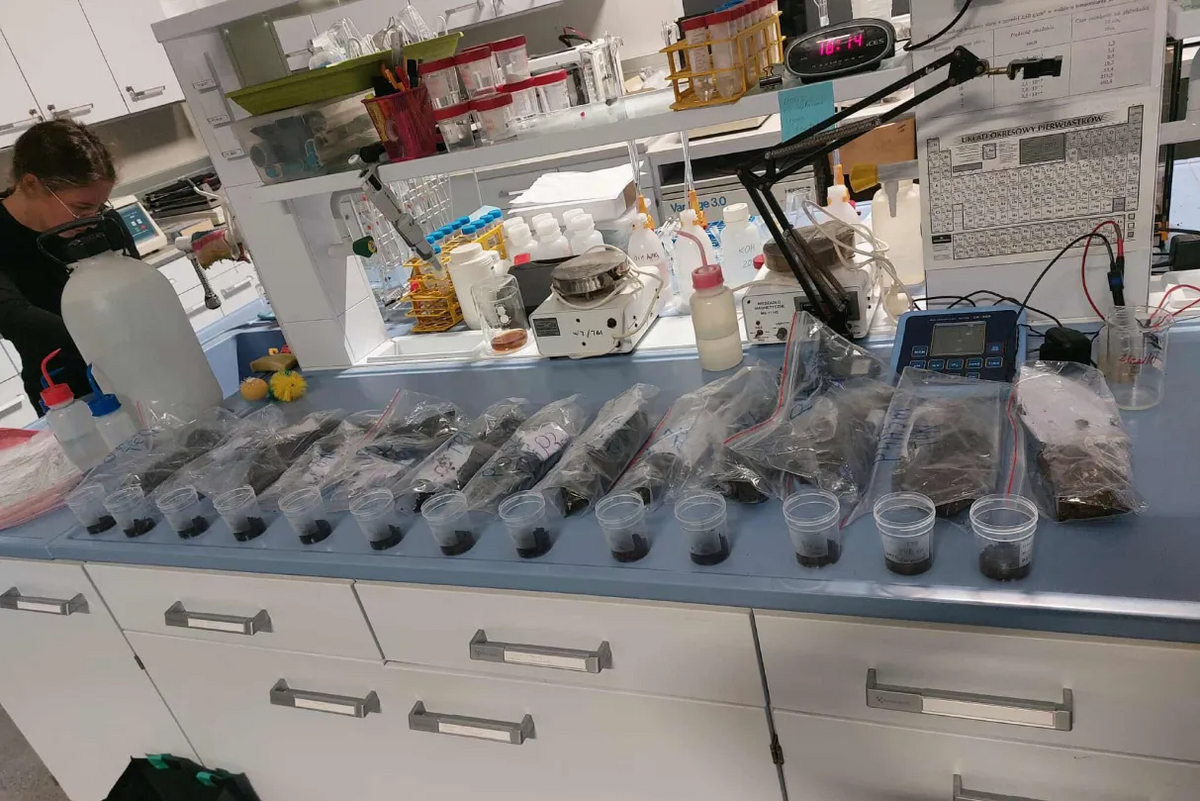
The project entails taking samples directly along the route as well as 5 metres away from it, at nine designated characteristic points. When studying soil in the context of degradation, students analyse the following parameters: pH, sorption capacity, and the content of heavy metals, organic matter and calcium carbonate.
The research covers three natural and landscape zones:
- the valley zone (from the ticket offices to the mountain hut, covering forested areas with a relatively gentle gradient; the trail follows a wide path here, and its initial section runs along a tarmac road)
- the approach zone (between the mountain hut and the ridge – the section with the steepest gradient with an increased risk of rockfalls; natural rockfall is common here and visitor numbers are relatively low)
- the ridge zone, connecting the peaks (an area with fairly heavy tourist traffic, characterised by exposed soil and sparse vegetation).
Map of sampling points.
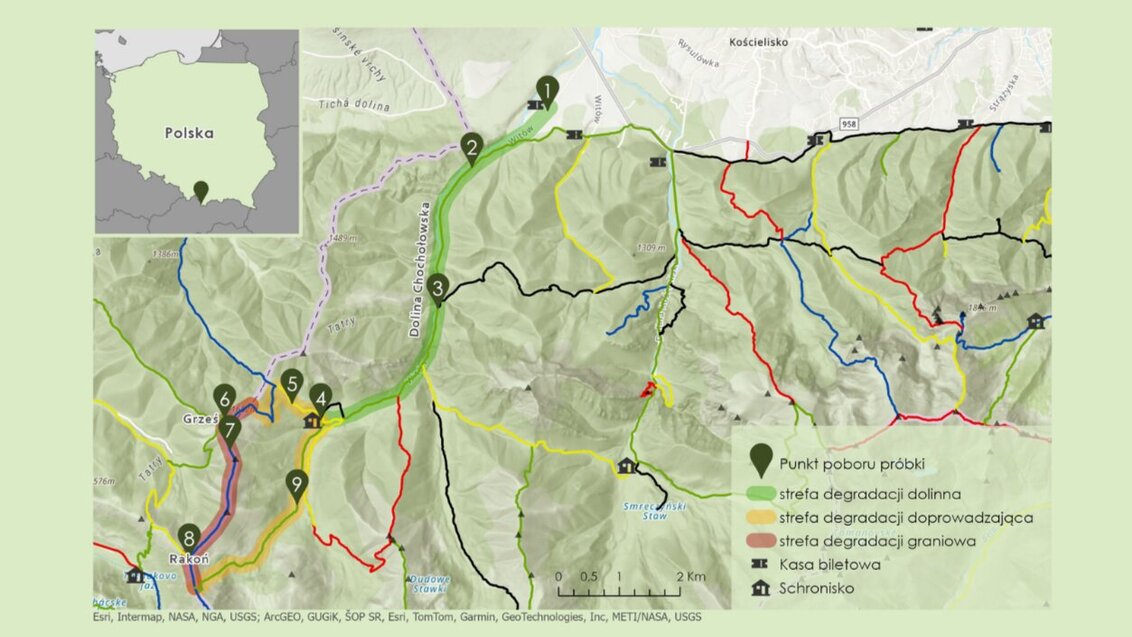
The locations of the points were determined before field work began, as this required prior agreement with the Park’s management. Each point has been reviewed and approved by a Park employee. Furthermore, carrying out a project in the Tatra Mountains requires approval from the Ministry of Climate and Environment.
The initial phase of the research was conducted on a broad scale in order to identify the properties of the soil with as much precision as possible. Individual zones differ in terms of vegetation and the volume of tourist traffic. The majority of tourists only make it as far as the mountain hut; they are less likely to undertake longer hikes that require more preparation. These differences also apply to environmental processes: in higher-altitude areas with steeper slopes, there is a greater risk of natural erosion and degradation. It is important to take these factors into account when interpreting the results; therefore, the division into zones is of key importance for comparative purposes.
The project started in 2024, and the first sampling took place a year later, in October 2025. This year, the students are planning to repeat it and expand the analyses, as they were unable to cover all field sites due to the risk of avalanche.
“By analysing the content of organic matter or heavy metals, we determine the current condition of the soil. Sorption capacity is a parameter that we are investigating to assess the potential of soil to bind future pollutants. In this respect, our project stands out from other similar studies,” explains Katarzyna Ostręga.
“Our analyses summarise the current state of knowledge. Importantly, we focus on soil surveys and situate our findings within the broader context of trail degradation. In addition to the elements that can be easily observed in the field, we are also introducing a laboratory component that is strictly measurable, precise data,” says Zofia Fabrowska.
At this stage, the students have already drawn their initial conclusions regarding the valley zone. Research shows that the impact of tourism in this area is negligible, and consequently, the level of nature conservation in the Park remains very high.
“I was involved in the metal analysis and can confirm that the allowed levels of heavy metals have not been exceeded. The soil condition is good in this respect, although we observe variations in concentrations depending on the distance from urban areas. The closer these areas are, the higher the concentrations of metals. Deeper into the Park, where the protection is higher, the levels are lower,” says Katarzyna Ostręga.
There is also a slight difference between the samples taken on the trail and those taken 5 metres off the trail, but they do not exceed the normal range. Fortunately, this difference is not significant enough to cause concern.
It should be noted that the last year's survey was not carried out in full; so far, the students have surveyed five out of nine points. They are going to repeat and expand the analyses in order to obtain a comprehensive spatial analysis and compare the results with previous measurements.
The students presented the initial results of their work at the 66th Barbórka Conference of AGH University Student Research Clubs, where they came third in the engineering and environmental protection section.
Notably, the students plan to attend the Goldschmidt Conference, the most important annual international conference on geochemistry and related topics, organised by the Geochemical Society and the European Association of Geochemistry, which will take place in Canada this year.
The Chochołowska Valley was selected for the project as it is one of the areas most at risk of degradation, also very popular with tourists. What is more, from the very outset, the project has been based on the article by Agata Ciszewska and Marta Deptuła entitled “Factors affecting the degradation of hiking trails within the Tatra National Park”.
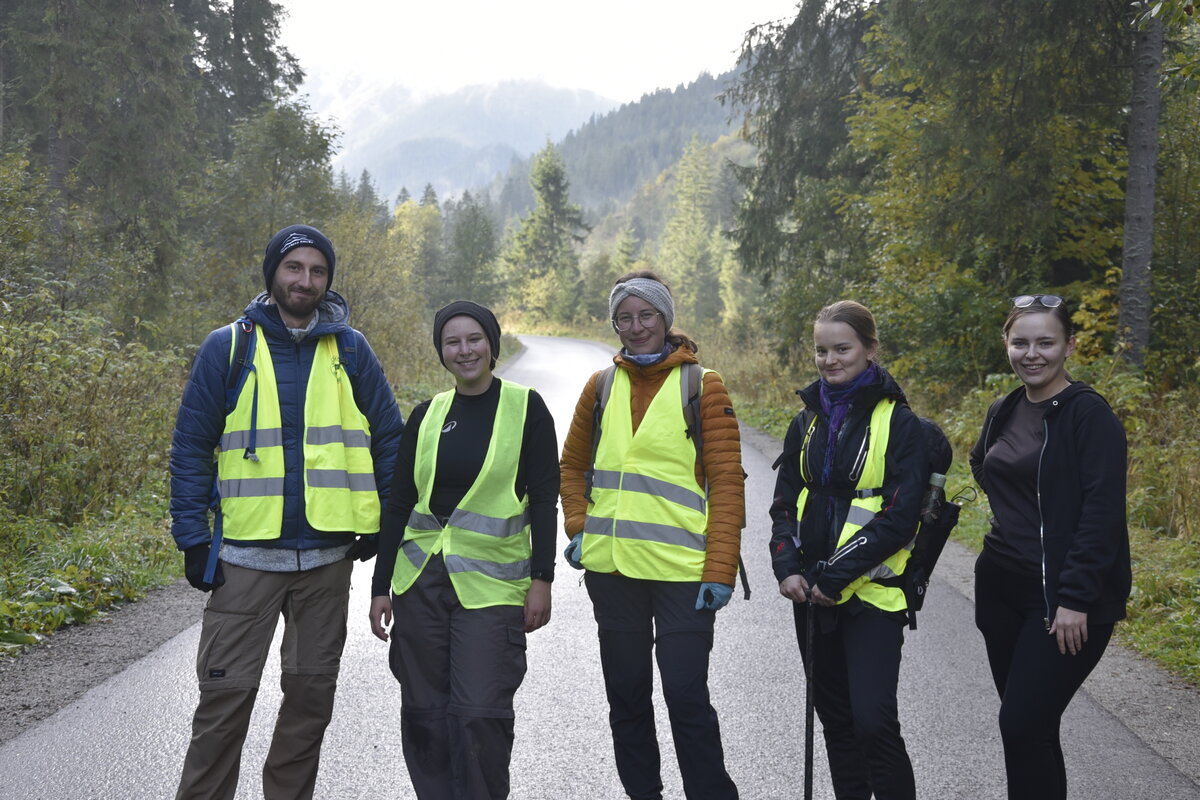
The team comprises students from three faculties:
- Faculty of Geo-Data Science, Geodesy, and Environmental Engineering – Wiktoria Wójcik, Zofia Fabrowska, Joanna Głowacka
- Faculty of Geology, Geophysics, and Environmental Protection – Wiktoria Wiejak, Eugeniusz Świstuń
- Faculty of Energy and Fuels – Katarzyna Ostręga.
As soon as the snow melts in the Tatra Mountains, the students plan further field trips, during which they will collect soil samples for analysis.
 New academic year discounts in AGH University e-Shop
  Monitoring mining and post-mining areas: AGH University part of MINERVA research project
  AGH University Rector appointed Chair of IZTECH Council
  AGH University retains its position in THE World University Rankings 2027
  Two AGH University projects with FIRST TEAM grant
  From nanoparticles to optogenetics: AGH University researcher on a path towards precise neural control
  A university shaping the future
  Web of Science AI Research Assistant – trial access

