Article
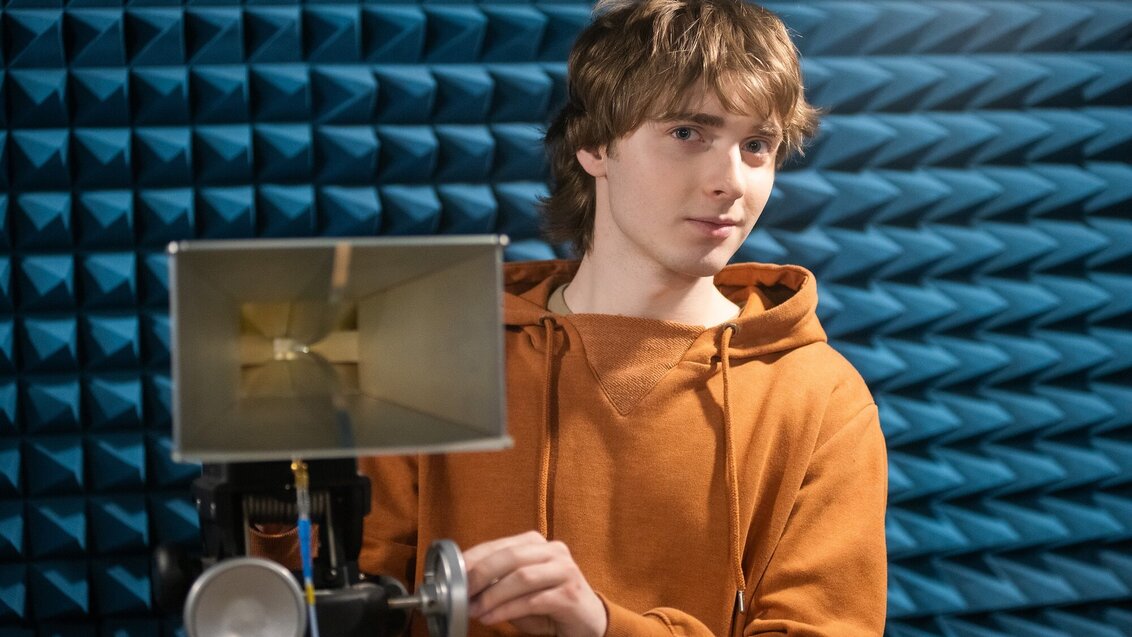
The results of the 2025 edition of the Rector’s Grants have just been announced. The selection committee granted funds to eighty projects implemented by the AGH University Student Research Clubs for the total of PLN 1,649,907.
What projects will be conducted by AGH University students within research clubs? These will be research and construction projects, certainly original and ambitious like our students, for example the project and construction of a zero-emission solar boat; testing insect life-support and examination systemin stratospheric conditions; construction of an aircraft capable of terrain mapping, object detection, and target-dropping; a single-legged Wheel-E balancing robot; a system for verbal communication with NPCs in video games using language models; metamaterial acoustic lenses with labyrinthine geometry for focusing an acoustic beam; a biomimetic aircraft control system; membrane acoustic metamaterials for enhancing acoustic isolation; materials for building on the Moon; an autonomous rollerskiing robot; a remote-controlled research boat; an application project for learning to correctly identify fingerprint traces; a geoeducational field game around Krakow for children and teenagers; the development of research tools for sports equipment and their application for the development of Polish ski jumping and alpine snowboarding athletes.
The final lists also includes projects concerning our university and community, such as a ceramic model of the AGH University campus; the impact of student Juwenalia activity on the state and chemical composition of soils of the AGH University Student Campus – comprehensive study of contaminants and physicochemical properties; GPT models in higher education – analysis of AGH University students’ usage patterns.
The competition has seen 130 applications. Nine of them were recognised as strategic, i.e. ones that are a promise of academic and/or construction success, and thus promote the university, and their effects will be visible in the long term. The list of basic projects included seventy-one applications.
The competition committee was composed of: Vice-Rector for Student Affairs, Professor Rafał Dańko (head); Rector’s Proxies for Student Research Clubs – Professor Paweł Bogacz, Dr Joanna Augustyn-Nadzieja, and Dr Paweł Janowski; and representatives of the Student Government – Michał Majchrzak, Paweł Juras, and Bartosz Lewek.
In the evaluation of the applications, the following factors were considered: compliance with at least one of the National Smart Specialisation or programmes of the Ministry of Culture and National Heritage, compliance with at least one Regional Smart Specialisation for the Małopolska Region, being part of at least one of the Priority Research Areas implemented at the AGH University. What also mattered for the committee were also the chances for the subject matter of the application to be published and/or commercialised as well as the promotional value of the project for the university.
 New academic year discounts in AGH University e-Shop
  Monitoring mining and post-mining areas: AGH University part of MINERVA research project
  AGH University retains its position in THE World University Rankings 2027
  AGH University Rector appointed Chair of IZTECH Council
  Perła finishes second in European solar car challenge
  From nanoparticles to optogenetics: AGH University researcher on a path towards precise neural control
  A university shaping the future
  Web of Science AI Research Assistant – trial access

