News
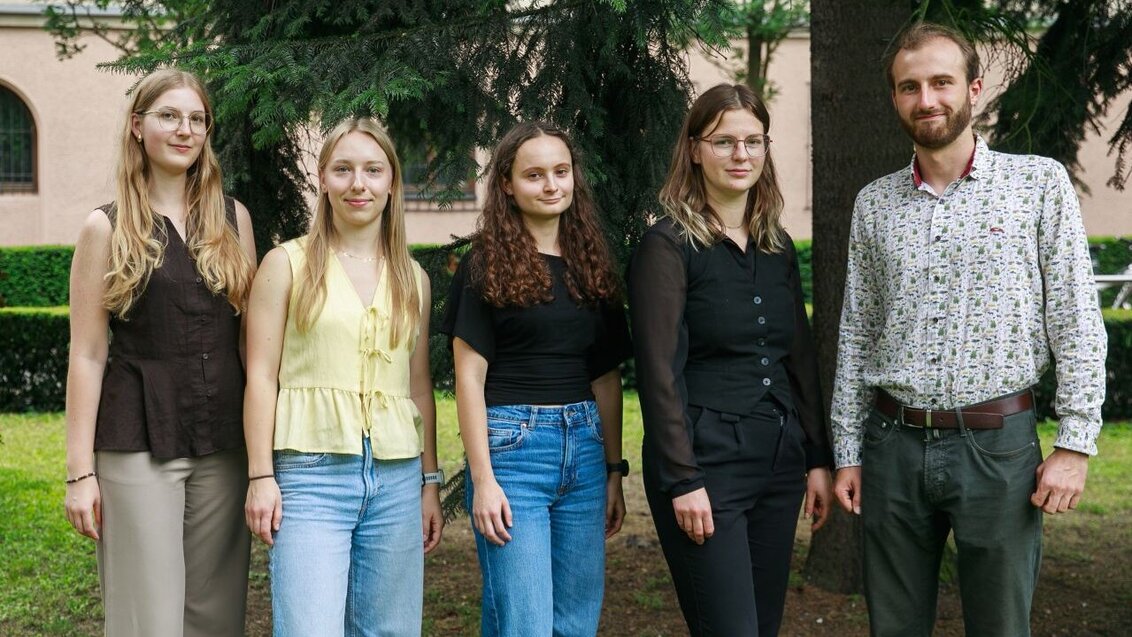
Photograph: AGH University Krakow Student Photo Agency (KSAF)
AGH University students are working on “HydroWood”, a project in which they are developing their own proprietary technology for natural wood-based filters for the treatment of drinking water. Ultimately, they are planning to carry out tests in Ghana in order to test their filters under more natural conditions.
The young researchers are focusing on developing natural filters designed to remove microbiological and inorganic contaminants, primarily coliform bacteria and heavy metals such as lead. Their starting point was to use readily available and environmentally friendly materials. Wood plays a key role, or, more precisely, its active layer, that is, the network of vessels and pores, which enables it to trap particles and microorganisms. These are supplemented by mineral materials with high sorption properties, such as diatomite, which are responsible for binding heavy metals.
“Our filter is based on a combination of wood and sorbent materials. Although the sorption properties of various rocks were already known, no one had combined them with the properties of wood, which can reduce the number of bacteria remaining after filtration,” says Natalia Malcherek from the Tryton Student Research Club.
The project began with the preparation of materials and their specifications. The students analysed various types of wood, assessing their structure, permeability, and ability to remove pollutants. At the same time, they developed mineral components that could improve sorption efficiency. They then designed and built prototype filters, testing various layer configurations, material ratios, and flow conditions.
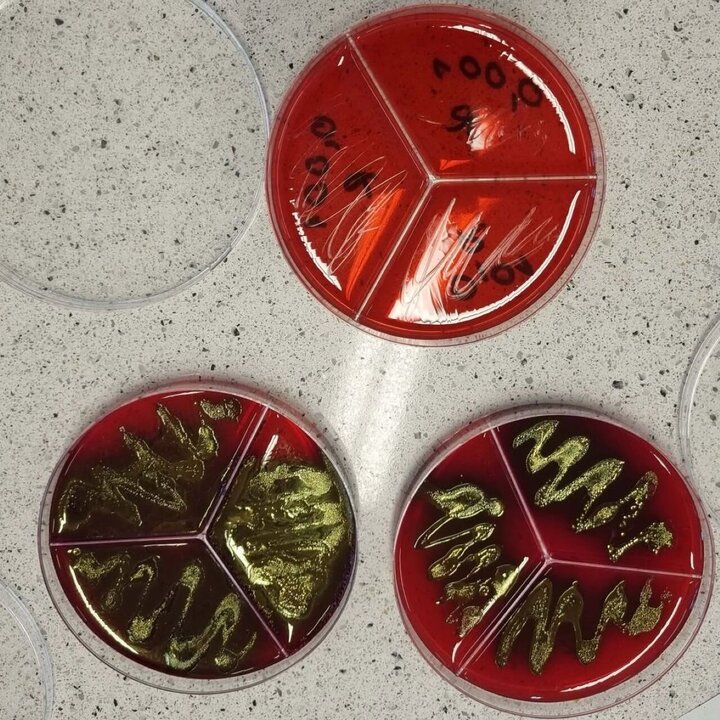
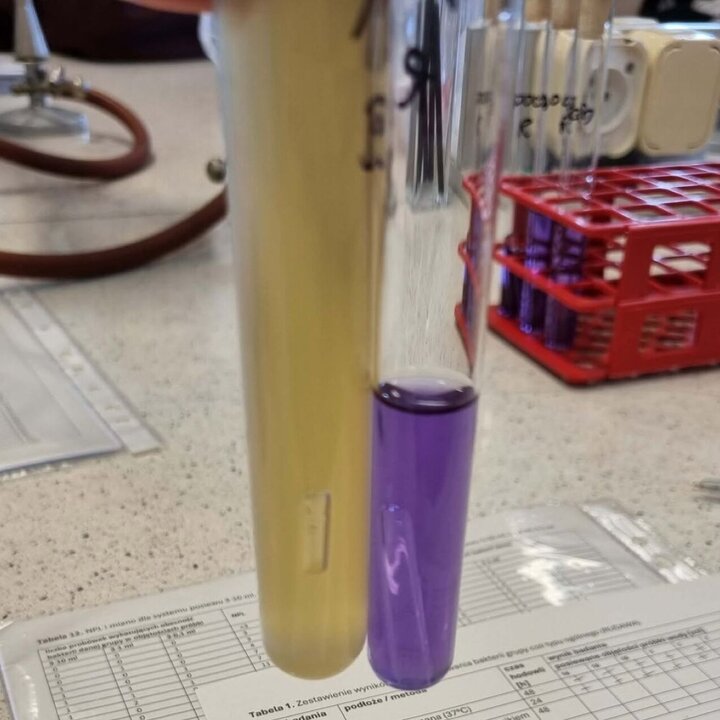
A key stage was laboratory testing, which made it possible to accurately assess the effectiveness of the filters. As part of the microbiological analyses, the researchers studied the reduction in coliform bacteria, which is a key indicator of drinking water safety. These studies were carried out under controlled conditions to compare the effectiveness of different types of filters and determine which solutions are the most effective at removing biological hazards.
The students also carried out chemical analyses focusing on heavy metals. They used atomic absorption spectrometry (AAS) to determine the concentrations of elements such as lead. It is a highly sensitive instrumental method that enables the detection of even trace amounts of metals in water samples by measuring the absorption of radiation by free atoms of a given element. This enabled them to determine to what extent the filter reduces the concentration of pollutants.
In addition, the researchers also used UV-VIS spectrophotometry to analyse other chemical components in the water and monitor changes occurring in the filtration process.
The experiments were performed on both model solutions, with carefully controlled pollutant compositions and concentrations, and real water samples collected from natural environments, including the Rudawa and Vistula rivers. As a result, they were able to test the performance of the filters under conditions that resembled real-world scenarios and to assess their application potential.
The students placed great emphasis on optimising and testing various filter designs, whilst changing the flow parameters, selecting materials, and determining their layout. They analysed not only the effectiveness of pollutant removal but also the durability, performance, and reusability of the filters. Their aim was to develop a solution that would be effective, simple, and practical to implement, even with limited resources.
The results obtained indicate that the solution has significant potential and justify further work on its development and implementation.
A great honour for the team is the invitation to collaborate received from Professor Albert Ahenkan, who works at the University of Ghana. In September, the students are to travel to Accra, where they will carry out real-world filters testing and collaborate with local researchers.
“For us, ‘HydroWood’ is, above all, about intensive research encompassing the design of experiments, the operation of specialist equipment, and the analysis and interpretation of results. At the same time, we are developing technology that could be used as a low-cost and environmentally friendly method of treating drinking water, addressing the real challenges associated with access to safe water,” says Julia Czerska.
The project is carried out by the Tryton Student Research Club, which operates at the Faculty of Geology, Geophysics, and Environmental Protection at the AGH University of Krakow. The club’s supervisor is Eugeniusz Świstuń, and the research is carried out as part of the ORLEN Foundation’s TURBOgrant programme. The team is made up by: Julia Czerska, Agnieszka Dudek, Zofia Fabrowska, Maciej Gołębiewski, Natalia Malcherek, Weronika Nowicka, Dagmara Wardawy, Maria Warych and Dominika Tworzydło.
An application for patent protection has been filed with the Polish Patent Office, and it is currently being processed.
Tests for the presence of E.coli
 Two AGH University projects with FIRST TEAM grant
  Perła finishes second in European solar car challenge
  AGH Solar Plane comes fifth in SUAS 2026
  The future of technical universities and quality of education in focus at AGH University
  Academia and industry unite for AI: establishment of CESAR
  Join the Autumn School on Technologies for Space Medicine

