News
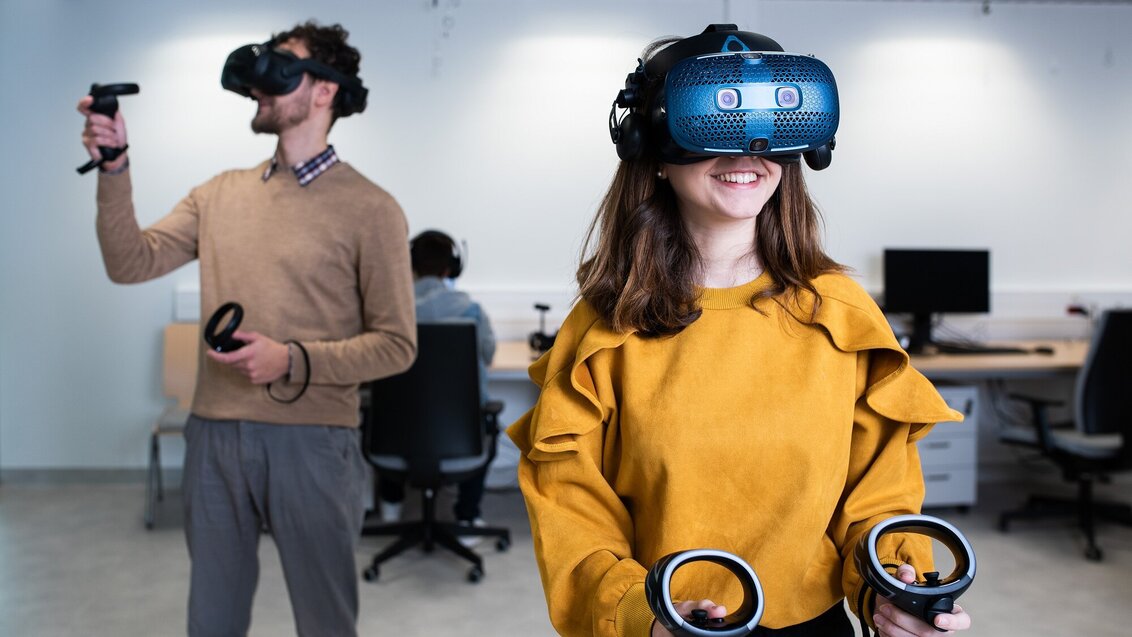
Brave, interdisciplinary, innovative – these are the words that best describe projects of AGH University Student Research Clubs that received Rector’s Grants in a total of PLN 1,649,990 in this year’s edition of the competition. The recognised initiatives span fields such as robotics, space engineering, medicine, energy engineering, environmental protection, and artificial intelligence.
AGH University students associated in research clubs will develop modern transport technologies, from ultralight composite panels for electric vehicle construction to the Hyperloop capsule prototype and a fleet of autonomous mobile robots. There is a large representation of unmanned aerial vehicles, such as objects for inspection tasks, in situ environmental tests, and the transport of biological samples.
In the field of space research, funding was awarded to a project of an isolated research facility simulating lunar conditions, and in the field of energy, to a functional model of a nuclear power plant with a pressurised water reactor, which will serve as both a teaching and research tool.
There is also a large group of health-promoting and biomedical projects, including: smart antibacterial dressings, a new generation of knee implants, voice biomarker analysis, and biological UV radiation shields. Worth noting is also an mobile application that detects mold on food products.
The students will also develop projects based on data analysis, artificial intelligence, and VR, such as an eye tracking system, multimodal classification of human activity, emotion analysis in games and VR environments, and research into students' attitudes towards GPT models. The list of funded initiatives includes those focused on environmental protection and sustainable development – from optimising mobile beekeeping using satellite data to analysing the impact of tourist traffic on soil degradation in the Tatra National Park.
There are also innovative mechanical designs, such as the Wheel-E single-legged balancing robot and a metamaterial acoustic enclosure that reduces noise while maintaining airflow. The list of projects also includes an educational and promotional project called GeoVR, which offers a journey through Polish rock deposits.
There were up to 122 applications in this year’s edition. The committee granted funding to 76 projects, five of which were deemed strategic. These are projects with long-term potential, great scientific and engineering prospects, and great significance for the promotion of the university. The remaining 71 initiatives were qualified as basic projects.
Strategic projects
- project title: Construction and validation of GraviTE models. A design of a new manipulator with six degrees of freedom and simultaneous localisation and mapping systems (SLAM) for the planetary rover Kalman
research club: AGH Space Systems
funding: PLN 120,000 - project title: Improvements to the design of UAVs and software adapted to perform military and rescue missions for participation in the international SUAS 2026 competition and the national Droniada competition
research club: AGH Solar Plane
funding: PLN 113,000 - project title: Integration of components and finalisation of the construction of the zero-emission solar boat Delta
research club: AGH Solar Boat
funding: PLN 120,000 - project title: Design, construction and validation of an autonomous electric 4x4 race car for participation in the international Formula Student competition
research club: AGH Racing
funding: PLN 120,000 - project title: Perła – integration of solar car components and participation in international competitions
research club: AGH Eko-Energia
funding: PLN 120,000
The selection committee was composed of Vice-Rector for Student Affairs, Prof. Rafał Dańko (head), and Rector's proxies for Student Research Clubs: Professor Paweł Bogacz, Dr Joanna Augustyn-Nadzieja, and Dr Paweł Janowski.
The projects have been evaluated for their:
- compliance with at least one National Smart Specialisation (KIS) or a Regional Smart Specialisation for Małopolska (RIS)
- being part of a Priority Research Area implemented at AGH University
- potential for publication and commercialisation of results
- significance for the promotion and image of the university.
The purpose of the Rector’s Grant competition is to support students in developing practical knowledge, competencies and skills as, well as improving qualifications through participation in the development of creative solutions, promising scientific work, concepts and projects, and active participation in the development of the university.
For more information, go to the website of the Student Affairs Centre.
 New academic year discounts in AGH University e-Shop
  Monitoring mining and post-mining areas: AGH University part of MINERVA research project
  AGH University Rector appointed Chair of IZTECH Council
  AGH University retains its position in THE World University Rankings 2027
  Two AGH University projects with FIRST TEAM grant
  From nanoparticles to optogenetics: AGH University researcher on a path towards precise neural control
  A university shaping the future
  Web of Science AI Research Assistant – trial access

