News

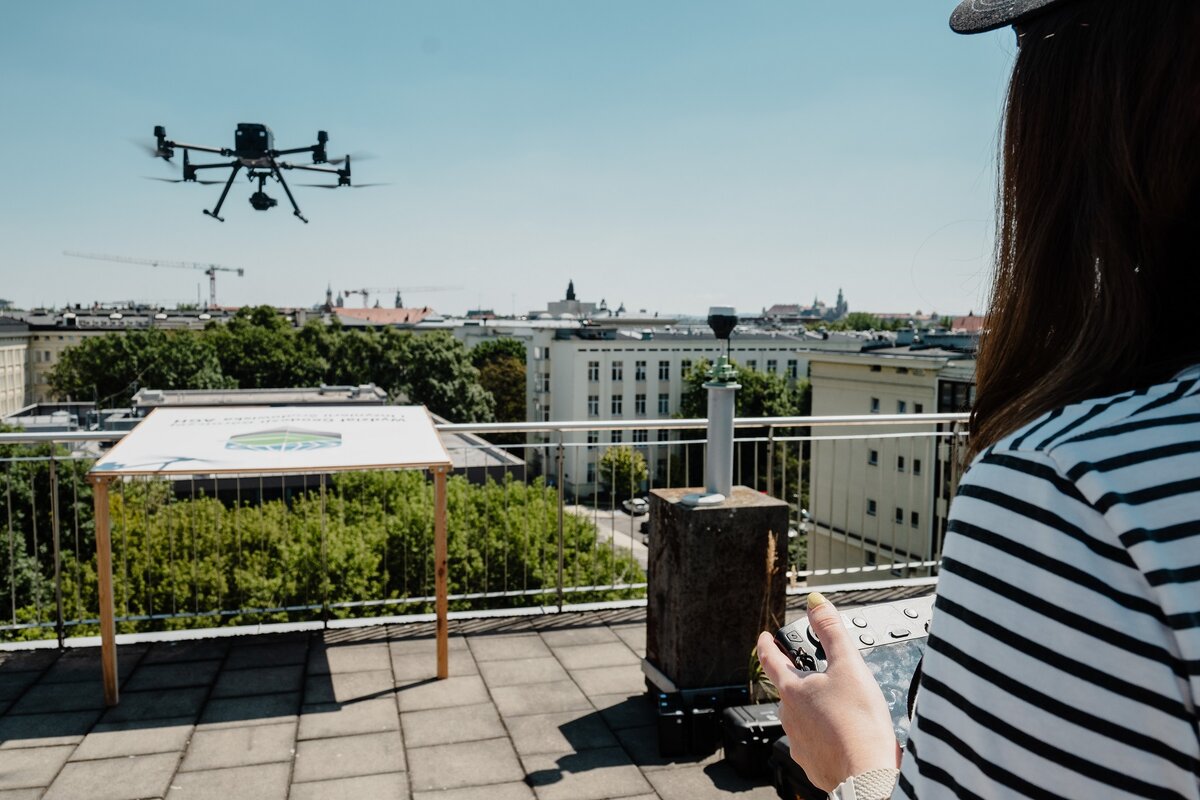
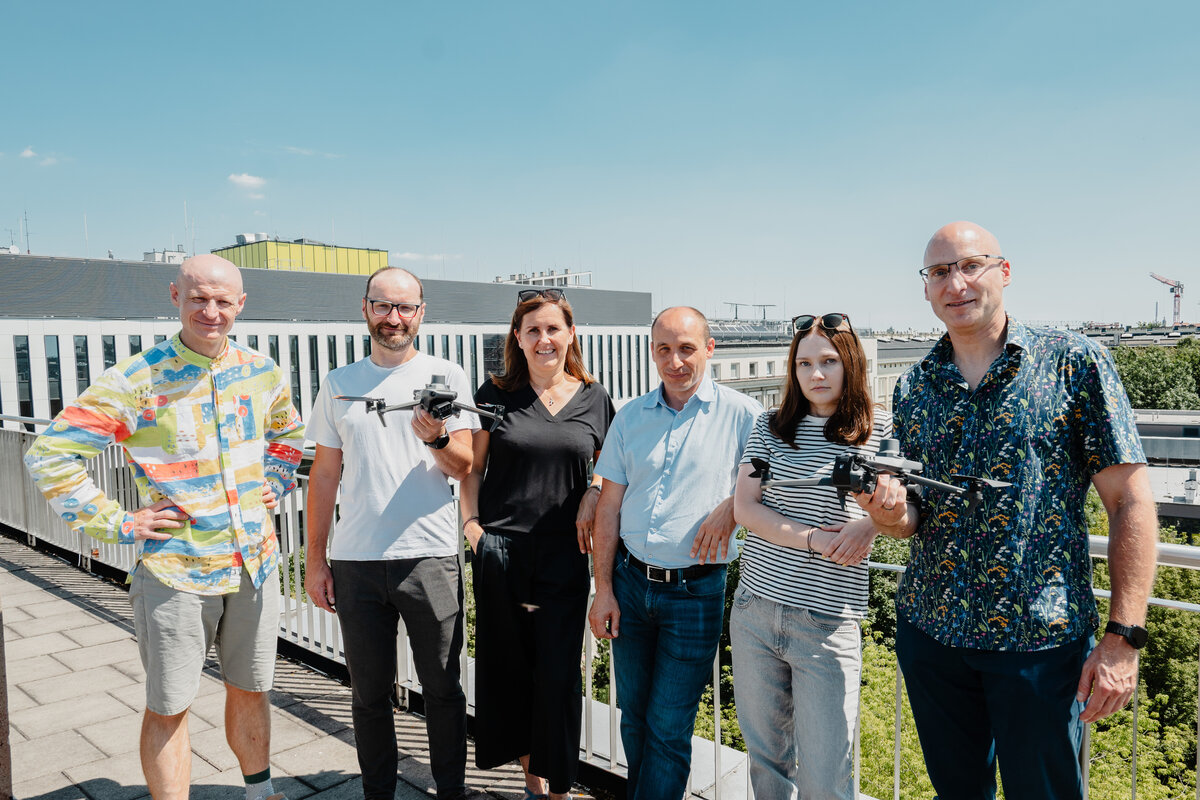
The AGH University of Krakow has launched the AGH University Drone Centre (CEDR AGH). The unit brings together the expertise of specialists in unmanned technologies and uses one of the largest university fleets of unmanned aerial vehicles in Poland. The new Centre will coordinate research, develop infrastructure, and foster collaboration between academia, industry, and public institutions.
The main task of the newly established Centre will be to integrate and develop research with the use of unmanned aerial vehicles (UAV).
“Expertise in the field of drone operations is being developed by teams representing various disciplines at AGH University. These range from surveying and environmental engineering, through automation, computer science, and telecommunications, to materials engineering, and space technologies. The establishment of the Drone Centre will enable these activities to be even more effectively integrated, joint research projects set, and modern technologies of economic importance to be developed,” emphasises Professor Jerzy Lis, AGH University Rector.
As explained by Dr Paweł Ćwiąkała, Associate Professor at AGH University and Director of the Drone Centre:
“For years, AGH University has been developing research and technologies utilising unmanned aerial vehicles; however, until now, these efforts have been dispersed between teams operating within different university units. The establishment of the AGH University Drone Centre brings these areas of expertise together and creates a space for collaboration and the development of joint research and implementation projects. We want the Centre to become a hub uniting specialists working on both the design and navigation of drones, as well as the advanced processing of data collected through their use. This will enable us to respond more effectively to the challenges facing modern science, the economy, and security.”
The Centre’s scientific council will feature specialist from the following units:
- Faculty of Geo-Data Science, Geodesy, and Environmental Engineering
- Faculty of Mechanical Engineering and Robotics
- Faculty of Computer Science, Electronics, and Telecommunications
- Faculty of Electrical Engineering, Automatics, Computer Science, and Biomedical Engineering
- Faculty of Metals Engineering and Industrial Computer Science
- Faculty of Geology, Geophysics, and Environmental Protection
- Faculty of Space Technologies
- AGH University Cybersecurity Centre
- Centre of Excellence in Artificial Intelligence.
The Centre is set to become a platform for collaboration between researchers developing drone technologies, sensor and navigation systems, as well as advanced methods for analysing data collected by drones.
One of the largest UAV fleets in Poland
The establishment of the Drone Centre stems from the dynamic development of unmanned technologies at AGH University. Currently, the University has nearly 50 certified UAVs approved for flight operations, and as many as 60 pilots affiliated with the university holding the required qualifications. The research teams are also equipped with advanced measurement systems mounted on unmanned aerial platforms, including multispectral cameras, sensors for specialised environmental monitoring, and laser scanners. As a result, our academics can carry out both conventional photogrammetric missions and advanced research related to the monitoring of infrastructure, the environment, and processes occurring on the Earth's surface.
Drone cage
The Centre’s operations will include both research and development projects, as well as educational initiatives. The Centre is going to develop new courses and electives, cooperate with student research clubs, and expand the offer of non-degree postgraduate programmes related to unmanned technologies.
Among the planned investments is the construction of a specialist drone testing facility. The drone cage, a fully enclosed testing environment, will provide a safe and controlled space for conducting experiments and evaluating new drone designs. The facility will be available to both researchers and students pursuing their own projects. The plans also entail the establishment of a meteorological laboratory with stations for testing navigation systems, a measurement base for sensor calibration, and a mobile research laboratory.
From archeology, through underground mines, to agriculture and digital twins
Among the many areas of drone research explored by AGH University scholars is the use of drones for monitoring ground surface deformation. Using photogrammetric data, researchers can measure displacements resulting from mining operations. Drone technologies enable the assessment of both horizontal and vertical surface movements, support the monitoring of infrastructure safety, facilitate landslide analysis, and help detect terrain anomalies over extensive areas. Drones are also used to monitor erosion processes that affect hiking and tourist trails. Projects in this particular area are conducted by AGH University staff in the Tatra Mountains and the Alps. The resulting analyses make it possible to assess the impact of tourist traffic on environmental degradation and to determine the rate of changes in the microtopography of the terrain.
Unmanned technologies also support archaeological research conducted by our scholars in Peru, Jordan, and Cyprus. By using laser scanning and multispectral cameras, they are able to identify the traces of ancient settlements, defensive ramparts and moats, even in areas with dense overgrowth.
Our researchers are also developing technologies that enable drone operations in environments where GPS signals are unavailable. International collaborative projects focus on testing autonomous navigation systems in underground mines and investigating the performance of unmanned platforms under conditions where the signals used for flight stabilisation are disrupted or degraded.
Another important area of research is the development of digital twins of infrastructure based on data acquired by drones. These technologies are used to monitor hydraulic engineering structures, transport infrastructure, and construction processes, among other applications.
Drones are also used in research on the environment and agriculture. Through advanced data analysis, researchers can identify plant species, quantify their representation within surveyed plant communities, and estimate biomass. These technologies support research carried out at experimental sites, plant breeding centres, and environmental monitoring agencies. They are used to evaluate crop condition and determine the dominant species within vegetation communities. The AGH University staff has employed drones in Cape Verde and Portugal to monitor post-fire forest regeneration.
Joint projects and cooperation with industry
One of the Centre’s priorities is the advancement of dual-use technologies that can be deployed across both civilian and defence sectors. The Centre also intends to actively participate in international R&D initiatives focused on advanced unmanned systems.
“Our goal is not only to coordinate UAV-related operations at AGH University, but also to build one-of-a-kind research infrastructure. We are planning to expand our laboratories, create a special drone testing facility, and implement joint projects, harnessing the potential of multiple university faculties. We aim to actively cooperate with industry, public administration, and international partners. Unmanned technologies are emerging as one of the key directions of development in the modern economy, and AGH University has the ambition and potential necessary to be an important actor in the process,” says Professor Ćwiąkała.

 Academia and industry unite for AI: establishment of CESAR
  AGH University in 2026 Global Ranking of Academic Subjects
  Polish Press Agency launches Scientific Think Tank with AGH University
  AGH University and the Polish Dual-Use Chamber join forces to promote the development of national security technologies
  AGH University students at a Summer Camp in Slovenia
  Economic Forum in Karpacz: three days of debates featuring AGH University experts

