News
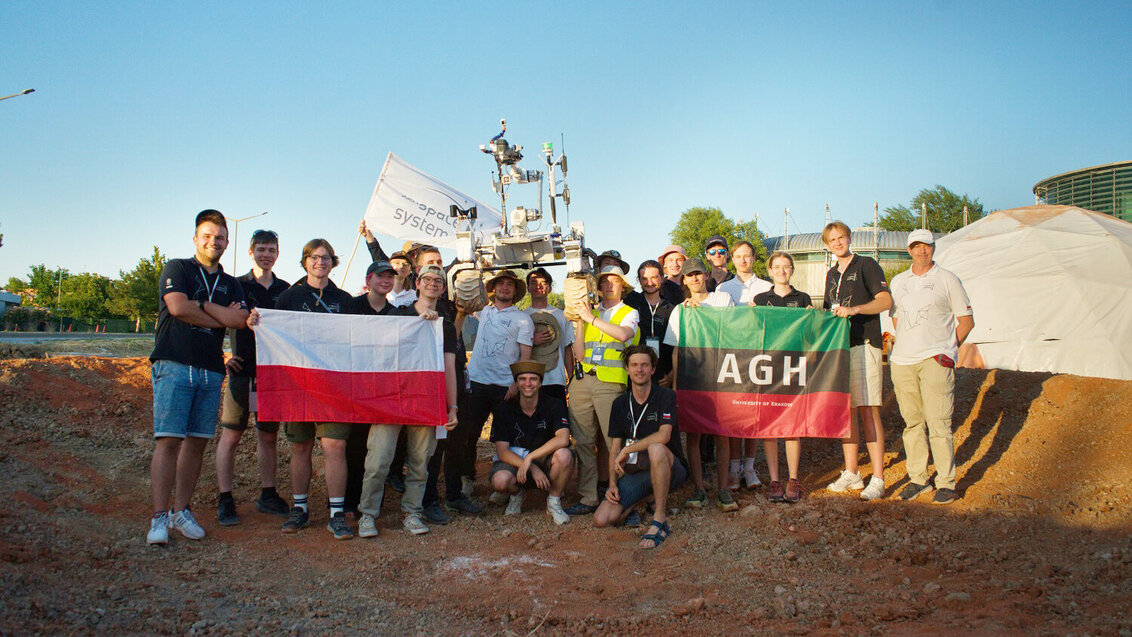
The AGH Space Systems team won the Anatolian Rover Challenge 2026, an international planetary rover competition, beating 19 teams from around the world. The success achieved in Turkey is a testament to the team’s outstanding performance. In just a few weeks, they will compete in the European Rover Challenge in Krakow.
The Anatolian Rover Challenge 2026 (ARC) took place from 29 July to 1 August. Young engineers competed in four missions simulating the exploration of Mars and the Moon. The tasks included the collection and analysis of soil samples, rescue operations carried out after dark, autonomous navigation through difficult terrain, and the coordinated operation of several rovers to support the infrastructure of a future lunar base.
The organiser of the Anatolian Rover Challenge, the Turkish Space Exploration Society (UKET), places emphasis not only on the development of space technology and innovative solutions, but also on teamwork, solving engineering problems and the exchange of experiences on an international scale.
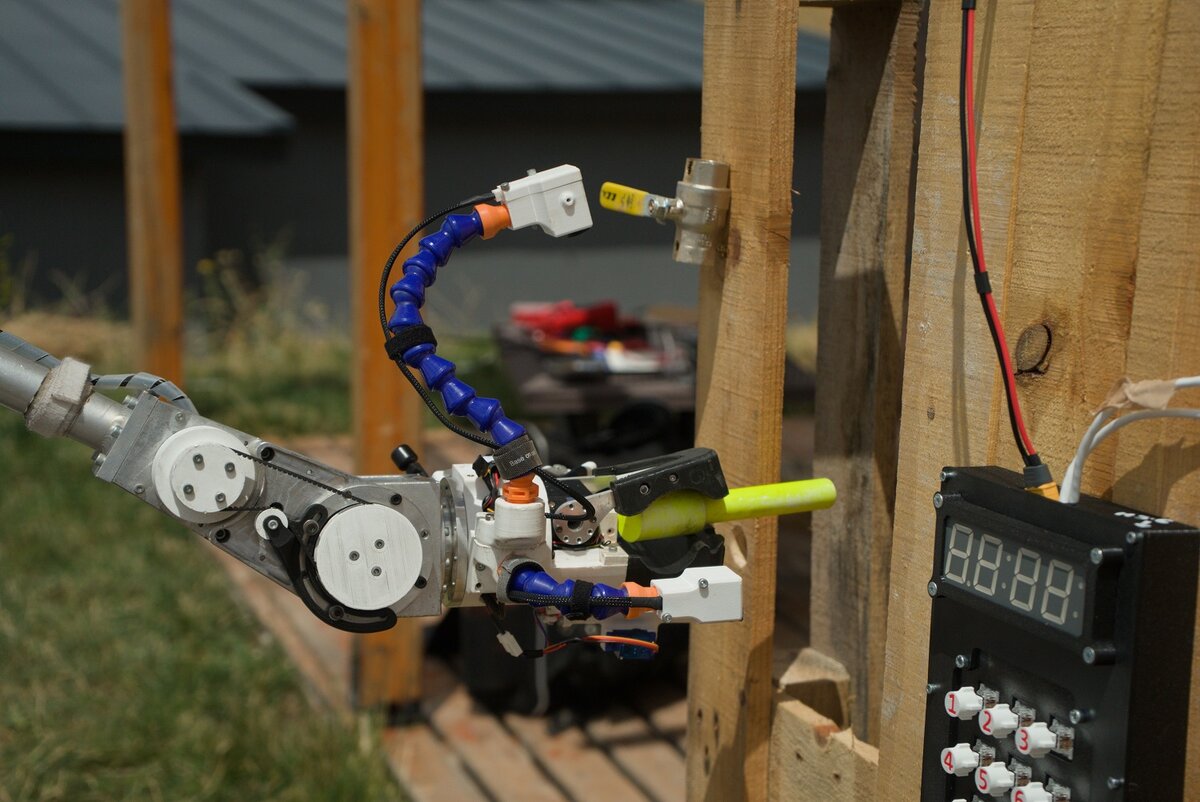
The scientific mission focused on the search for and analysis of Martian soil. The teams collected samples from the surface and beneath the surface of the site, performed measurements, and analysed the gathered data. Meanwhile, during the night-time mission, the rovers had to find the astronaut, locate the fuel leak, restore the key systems of the base to working order, and return safely to the airlock.
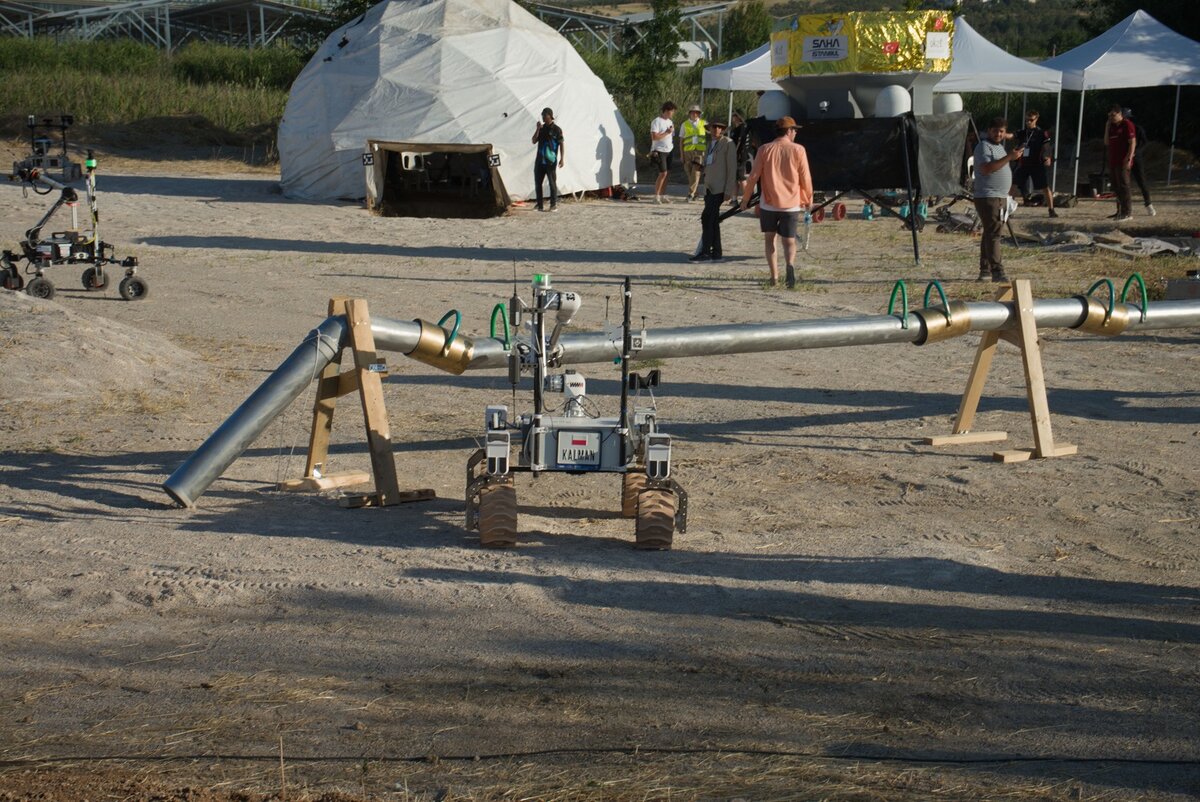
The most technically advanced task was the autonomous mission, as the rovers had to navigate the terrain independently, identify specified objects, explore a lava tunnel, and carry out tasks without direct intervention from operators. The competition assessed the effectiveness of autonomous driving algorithms, image recognition systems, and navigation and mapping systems.
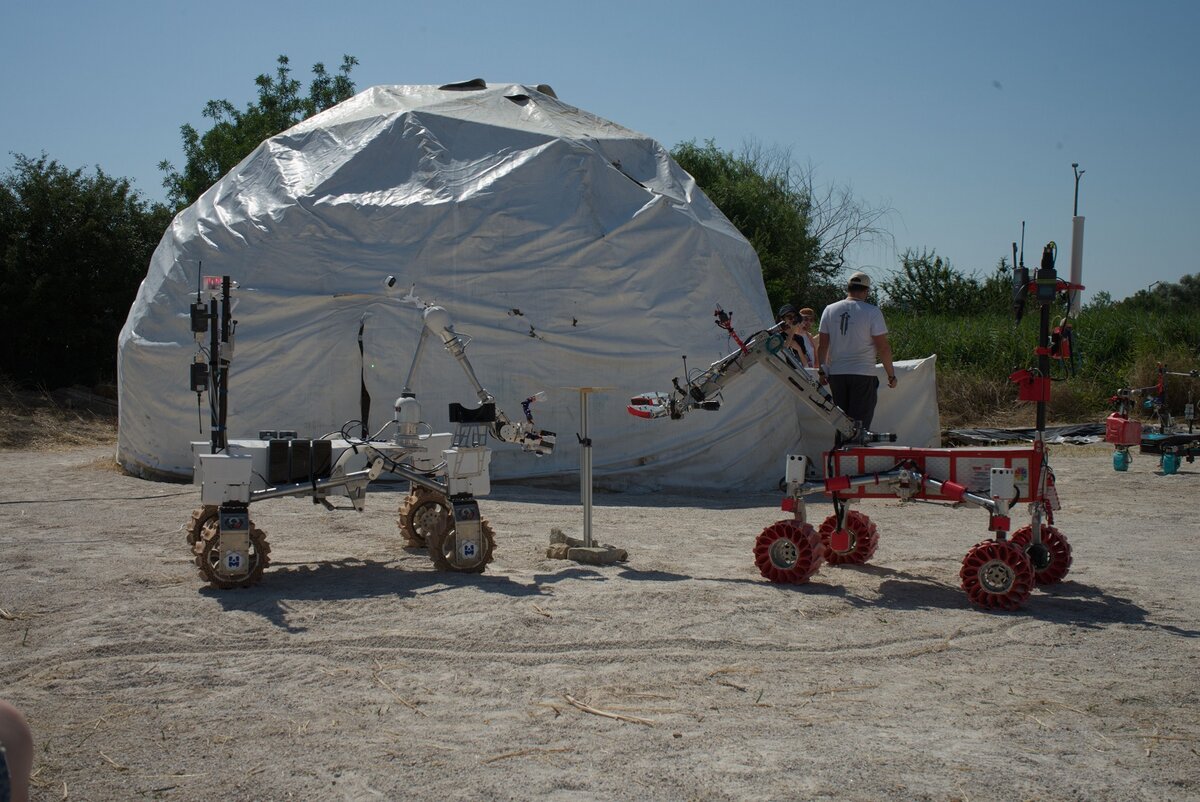
An unusual task in the Challenge was the collaboration mission, which required several teams to work together to carry out tasks relating to the operation of a lunar base. The teams had to retrieve research equipment, repair elements of the technical infrastructure, restore power supply, upgrade the base’s communications systems, and clear the lava tunnel.
Working in collaboration with the Legendary Rover Team from the Rzeszow University of Technology and the Yıldız Rover Team from Yıldız Technical University in Turkey, the Kalman rover completed all tasks flawlessly, scoring the maximum number of points.
Members of the AGH Space Systems team flew to Turkey a week before the competition to prepare Kalman for the missions ahead. After setting up the base station and assembling the rover, the team carried out field tests, operator training sessions, and trials of a new module designed to analyse soil samples using UV light.
“It was a challenging time, but also a brilliant opportunity to get to know teams from all over the world,” say the AGH Space Systems team members, reflecting on their participation in the competition.
The victory confirms that the AGH Space Systems team is currently among the very best student developers of planetary rover technologies and is well prepared for future appearances in international competitions.


 Academia and industry unite for AI: establishment of CESAR
  AGH University in 2026 Global Ranking of Academic Subjects
  Polish Press Agency launches Scientific Think Tank with AGH University
  AGH University and the Polish Dual-Use Chamber join forces to promote the development of national security technologies
  AGH University students at a Summer Camp in Slovenia
  Economic Forum in Karpacz: three days of debates featuring AGH University experts

